This article is dedicated to the men and women who develop the building codes, design and engineer code-compliant buildings, build those buildings, enforce the code, and, especially, serve as special inspectors who inspect and test portions of the many elements that comprise the structures in which we live and work. These special inspections are required by the building code(s) to monitor compliance and serve the best interest of public safety.
In new construction, structures are built “according to code.” These three words form an umbrella term covering all the IBC code acceptance criteria, including the model codes and standards adopted by the code. This “according to code” umbrella term encompasses hundreds (thousands, in fact) of real pieces of required code acceptance criteria that define the minimum code requirements all structures in the country must meet. Are architects, engineers, contractors, building officials, or special inspectors aware of all these thousands of bits of code acceptance criteria? You know that the answer to this question is no. That is why we all refer to the umbrella term – “according to code.” But this is a massive gray area regarding the building code, code acceptance criteria, and special inspections.
In this article, we will break down the nuances between what the building code mandates (in mandatory language) and what appears less important and more optional. We will look at how statements of special inspection are drafted and the impossibility of including 100 percent of the applicable code acceptance criteria. We are going to wade into the nuances of what special inspectors do in the field each day versus the project information entered in the formal report documenting the daily inspection visits and tests required by the code.
Early in this discussion, we should agree on what special inspections are and what their purpose is. IBC defines special inspections as “the inspection of construction requiring the expertise of an approved special inspector in order to ensure compliance with this code and the approved construction documents.” The IBC building code (in tandem with the applicable statewide code) represents the minimum code requirements for all structures built under the IBC code. The construction design documents may require MORE than the building code, but cannot require LESS than the building code requires. When the construction documents require less than the building code requires, the building code takes precedence. Additionally, when the IBC code conflicts with amendments and requirements of the statewide code, the statewide code takes precedence.
Most people in the design and construction industry agree that the primary purpose of the building code and special inspections is to help ensure that the critical project’s structural elements (including fire- and life-safety systems) are built correctly. By ensuring proper assembly and material code compliance, special inspections safeguard the building’s structural integrity and help to prevent structural failures. The special inspector is responsible for inspecting and testing the various disciplines and items listed in the project statement of special inspections developed by the Engineer-of-Record (EOR). In reality, can anyone list all the elements and items comprising the construction phases of a new structure? Can a special inspector actually inspect and/or test every single element or item that requires inspection “according to code”? Can the special inspector report every single type of inspection or test that they perform during the construction phases of the project? The answer to all these questions is a resounding no; however, a project-team approach to detecting and resolving discrepancies will result in a code-compliant structure. Now, let’s get down to where the “rubber meets the road.” The following is a list of many of the nuances of project special inspections, discipline by discipline:
Geotechnical & Soils
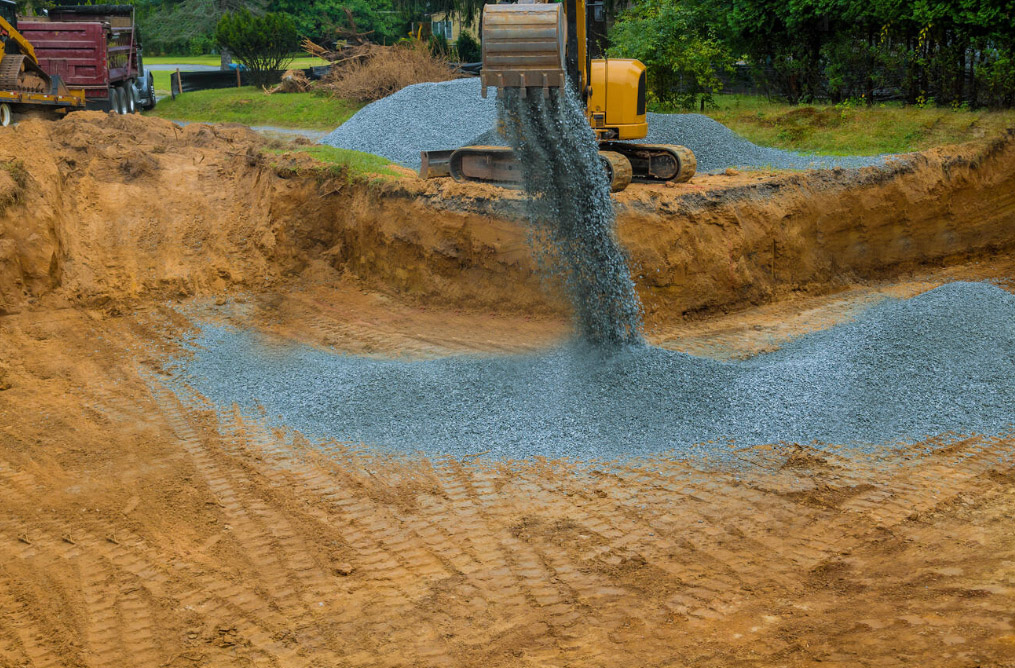
- Is the thickness of individual lifts of soil placed beneath the building and adjacent areas verified?
- Are suitable fill materials used? Have unsuitable fill soils been eliminated?
- Is the recommended bearing capacity achieved on the entire project footprint?
- Was all oversized material removed from compacted fill (as recommended by the geotechnical report)?
- Are slope steepness, slope swales, and slope ratios (cut and fill) in compliance?
- Is the vapor barrier properly placed beneath all concrete slabs on grade?
- Do the earthwork final grades achieve positive drainage away from building foundations and unpaved areas?
- Is compacted fill done in accordance with the approved geotechnical report?
- Can the achievement of design bearing capacity beneath all shallow foundations be verified?
Concrete
- Are material proportions and concrete in project delivery ready-mix trucks in compliance with the approved concrete mix design approved for the project?
- Are initial curing temperatures around concrete test specimens molded at the project provided and reported?
- Are proper materials and workmanship used to place post-installed concrete anchors on the project?
- Is the concrete rebar properly placed with respect to clearance, size, type, and spacing, in accordance with code and contract documents?
- Are conditions for hot- and cold-weather concrete placement monitored for concrete temperature, subgrade temperature, air temperature, and the use of protective measures?
- Are the mix water/mix adjustments tracked to ensure the water-cement ratio is not compromised during concrete placement operations, and to verify compliance with air content code criteria?
- Are the precise locations (at the project site) of the concrete represented by the concrete test specimens reported?
- Is it possible to verify that additional mix water was not added to the “ready-mix” trucks after plastic concrete was discharged?
Masonry
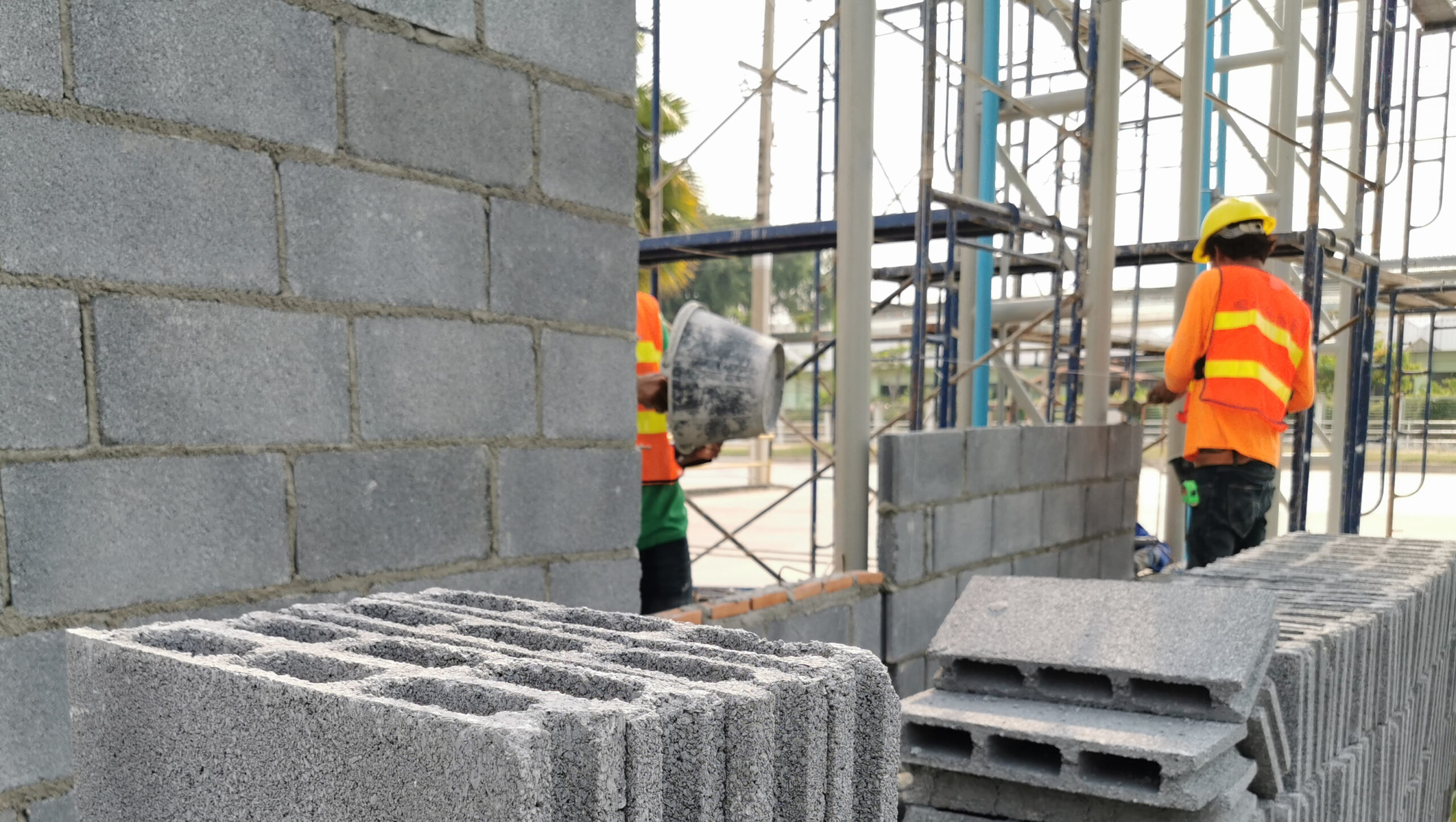
- Are the concrete masonry units being used at the project compliant with the masonry code and the masonry submittals submitted at the beginning of the project?
- Is mortar being spread full wythe or partial wythe as required by code and contract documents?
- Are mortar joints being tooled in accordance with code (thumb-print hard)?
- Regarding mortar joint thickness, are head and bed joints monitored to ensure compliance with code requirements?
- Is it verified that joint reinforcement must have ½ inch cover when not exposed to weather or earth, or 5/8 inch when exposed to weather or earth?
- Is a minimum of 6-inch lap splices for joint reinforcement provided?
- Are masonry walls being built “true to line” and “true to plumb” according to code?
- Are project mortar mixing times in accordance with code requirements?
- Is the storage, protection, and batching of masonry sand appropriate for site-mixed mortar?
- Are project special inspections being conducted in accordance with Level 1, 2, or 3 requirements?
Sprayed Fire-Resistant Materials (SFRM)
- Did the substrate condition inspection occur prior to application of SFRM?
- Did the special inspector inspect the thickness of SFRM and “application of minimum design thickness” of SFRM?
- Is the minimum frequency of thickness, bond strength, and density testing in compliance with code?
- Is the penetration of firestop systems in accordance with Chapter 7 of the IBC code?
- Are minimum ambient and substrate temperatures of 40 F degrees prior to, during, and after SFRM application in compliance with manufacturer’s instructions and IBC Chapter 7?
- Is the SFRM bond strength in compliance with IBC Chapter 17 and IBC Table 2.3?
- Is there compliance with fire rating requirements according to code, contract documents, and Underwriter’s Laboratory (UL) design number?
- Is there a final walk-through inspection of SFRM after application is completed to visually inspect for cracks, voids, spalls, or peeling of SFRM from substrates?
Structural Steel
- Does the welder’s performance qualification (WPQ) comply with the “essential variables” required by the project Welding Procedure Specification (WPS) such as welding process, base metal thickness, electrodes, and material P-number?
- Is welding through galvanizing or paint allowed?
- Are the installed anchor bolts actually the correct length? Did the concrete special inspector verify the proper installation of the anchor bolt dimensions during the installation process?
- How do you properly shim under a joist bearing angle where the embed plate is sloped, but should be level?
- The oxygen tank is low, and a replacement is available—is it okay to use a carburizing flame to preheat the steel prior to welding?
- What happens if the temperature of the electrode storage is okay at noon, but the rod oven was not on at night?
- If the EOR does not specify NDT requirements in the project contract documents, should the fabrication shop follow the NDT requirements of AISC 360, Chapter N?
- The SER has approved the welder qualifications, but the special inspector has identified noncompliances with D1.1. Does the special inspector still list the noncompliances as a discrepancy?
- Verify that the correct edition of the IBC code is used on the project, as well as the correct editions of the IBC adopted model codes (Chapter 35 of the IBC code lists the correct model code to use, and the statewide code specifies the correct edition of the IBC code)
The nuance items listed for each discipline in this article represent just a few examples of building code-required acceptance criteria for each discipline. One could easily list two or three times the nuances for each discipline. The point is that the IBC code, including all adopted IBC model codes and standards, plus the applicable statewide code, is “chock-full” of hundreds of code acceptance criteria snippets that must be provided by the special inspector to ensure code compliance. No single person will ever be aware of all of them; however, a good project construction team with experienced special inspectors will be aware of most of them.
The project team must not be adversarial but work together toward the common goal of code compliance for construction methods and materials. Every project should have a preconstruction meeting (prior to the commencement of construction) to discuss applicable building codes, acceptance criteria, and potential problems that may be encountered. Experience has shown that this preconstruction meeting can eliminate more than 50% of potential code violations and discrepancies that would otherwise occur. While perfection is not possible, an experienced project team working together with common goals of code compliance and maximum public safety will come close.
While some special inspections are designated as continuous by the code, many are designated as periodic inspections. Considering periodic code special inspections alone, many construction methods and materials are not inspected by a special inspector. However, if project team members, including experienced special inspectors, ply their trade and do quality professional work every day, a functional, structurally sound, code-compliant building will result.
Reference Codes and Standards cited in this article:
International Building Code (IBC)
Building Code Requirements for Structural Concrete (ACI 318) Specifications for Structural Concrete (ACI 301)
TMS 402/603 Masonry Code
AISC 360 Specification for Structural Steel Buildings
AWS D1.1 American Welding Society – Structural Welding
Download a PDF copy of this article here.
But wait! We have a lot more to say! For a complete picture of the Code and how it relates to Special Inspections, F&R would love to provide a virtual AIA-accredited Lunch & Learn presentation for the professionals at your firm.
Trouble Deciphering the Code? Contact the Expert at F&R! Alan S. Tuck, Director of Code Compliance & Training
E [email protected] | T 540.344.7939 | M 540.798.4440