

Special inspections of concrete reinforcing steel are required by the International Building Code (IBC), and these inspections are at times important, even critical, to the structural integrity of the concrete elements of the project. While special inspections of concrete rebar are critical, it is important to note that the IBC classifies these as periodic rather than continuous. This means the special inspector will not inspect ALL the reinforcing steel unless the construction documents require full-time inspection of the project rebar. Note inspection task #1 of the partial table 1705.3 exhibited below, excerpted from Chapter 17 of the IBC code.
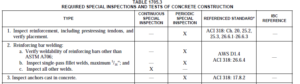
Once upon a time, the American Concrete Institute (ACI) required the inspection of ALL rebar in ACI 318 (Concrete Building Code). However, the word “all” was deleted from the ACI 318 code language several code cycles ago. Project special inspections of concrete rebar have been determined as periodic inspection since the deletion of the word “all” from the code occurred.
Design and construction professionals working with project concrete rebar should be familiar with the code tolerances for design phases, fabrication, and rebar erection and placement. Tolerance is defined by ACI 117 as “the permitted deviation from a specified dimension, location, or quantity.” Tolerances for rebar placement are primarily governed by ACI 318, ACI 117 (Specifications for Tolerances for Concrete Materials and Construction), and the Concrete Reinforcing Steel Institute (CRSI) Manual of Standard Practice in conjunction with the project construction drawings.
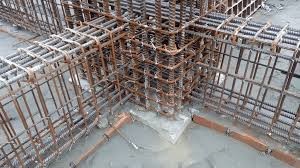
Accurate rebar placement dimensions and tolerances are extremely important during project construction, especially regarding the rebar’s location. Both concrete strength and rebar location are critical; however, rebar location is generally more important to overall structural integrity, as misplaced steel can lead to structural failure regardless of compressive strength.
Why Reinforcing Steel Location is Paramount
Effective Depth: Placing rebar at the correct distance from the compression face ensures the element can handle the intended (design) loads.
Durability and Protection: Proper placement (cover) prevents corrosion and protects the steel from environmental damage.
Structural Performance: Misplaced rebar (too deep or too shallow) can lead to failure and reduced crack control. Placing rebar ½ inch beyond code tolerances can reduce structural strength by as much as 20% if it alters the effective depth of a structural member, as rebar spacing is critical for performance.
Tension Resistance: Rebar is specifically positioned to absorb tensile stresses that concrete cannot withstand on its own. Example: Reinforcing steel is placed primarily along the bottom of a concrete beam being built. The top side is the compression side, the bottom is the tension side.
Key Reinforcing Steel Placement Guidelines
Concrete Cover: ACI 117 allows a tolerance of 3/8 inch for concrete cover when the member size is over 4 inches but less than or equal to 12 inches. (ACI 318, Section 26.6.2)
Effective Depth: Tolerances for the effective depth are typically ½ inch for members with a depth of over 4 inches and up to 12 inches, and 3/8 inch for members over 12 inches. (ACI 117, Section 2.2)
Bar Spacing: Rebar spacing tolerances are crucial to prevent structural failure, and ACI 318 sets the limits on how far apart reinforcing bars can be. (ACI 318, Section 25.2)
Bends and Ends: Tolerance for the longitudinal location of bends and ends of reinforcement is usually two inches. (ACI 318, Section 25.3)
Minimum Spacing of Parallel Rebars in a Horizontal Layer: Clear spacing shall be at least the greatest of one inch OR 4/3 (1.33) times the diameter of the nominal maximum size of the coarse aggregate in the concrete to be placed. (ACI 318, Sections 25.2.1 and 25.2.2)
ACI 117, Section 2, comprises approximately ten pages of various rebar tolerance criteria as well as tolerance symbols. Tolerance criteria are also offered for dowels, anchor bolts, bends, and concrete cover. One of the most important sources of rebar dimensional and acceptance criteria for field use is “Placing Reinforcing Bars” and “Manual of Standard Practice” published by the Concrete Reinforcing Steel Institute (CRSI). Rebar spacing and tolerance criteria are addressed in Chapters 8 and 11 of “Placing Reinforcing Bars” and Chapters 10, 11, and 12 of the “Manual of Standard Practice.”
Rebar Dimensional Criteria Redundancy
Rebar acceptance criteria redundancy does exist, and it can be confusing when you first wade into it. Almost the same criteria exists in ACI 318, ACI 117, ACI 301, and the CRSI rebar books. Over the past few building code cycles, ACI 117, ACI 301, and CRSI have attempted to mirror the acceptance criteria of ACI 318 (concrete code). Regarding concrete cover, the Section 3.3.2.3 tables of ACI 301 are practically identical to the Section
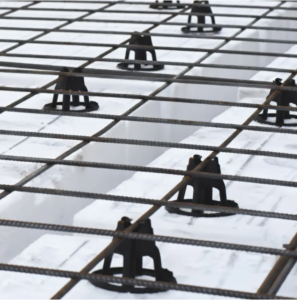
20.5.1.3 tables of ACI 318. As we end this discussion on rebar tolerances, it should be noted that ACI 318, ACI 301 (Section 3.3.2.1), and CRSI specifically prohibit using wood, clay brick, or rock to support reinforcing steel. Therefore, reinforcement should be supported by “bar support systems,” which are typically concrete blocks, concrete bricks, plastic chairs, or metal chairs designed to maintain the required concrete cover and prevent rebar displacement.
Concrete construction failures due to improper or missing reinforcing steel are generally caused by the inability of the structure to handle tension, shear, or bending forces, leading to cracks, buckling, or catastrophic collapse. A few examples are as follows:
- Skyline Plaza, Bailey’s Crossroads, VA A 30-story cast-in-place structure collapsed due to numerous factors, including shear reinforcement (stirrups) around columns leading to punching shear failure. Forensic studies showed, among other things, that the concrete was improperly consolidated, which resulted in a lack of bond between the rebar and steel (honeycombing). A 14-inch flat-plate slab collapsed, triggering a chain reaction of failures through the floor below due to improper concrete strength and premature removal of shoring.
- Pittsburgh International Airport Parking Garage Long after the project had been built, severe cracking was noticed in practically all the precast concrete double-T beams in the garage that supported the second and third floors. Analysis of the cracking concluded that the cracks were indicative of shear failure caused by inadequate prestressing and/or bonding between the reinforcing tendons and Improper placement of hangers and reinforcing bars at the beam’s dapped ends was also a contributor to the failure.
- Harbor Cay Condominiums Collapse, Cocoa Beach, FL This failure occurred during construction of the five-story flat plate residential The collapse was caused by numerous design and construction errors. The concrete slabs were only eight inches thick, whereas they should have been 11 inches thick to satisfy the American Concrete Institute (ACI) minimum and omit deflection calculations. The plastic chair spacers used to support the slab rebar were only four inches high (not high enough to meet design intent), which, coupled with the thin slabs, led to a very small effective depth.
Summary Remarks
The importance of ensuring that the reinforcing steel is the right size (according to the contract documents) and placed in the proper location within the concrete element is often addressed, and rightfully so. Precise, properly sized, and correctly located rebar is crucial for structural integrity; however, ensuring the proper depth of concrete covers the steel and preventing rebar displacement during the pour are generally considered equally important, as they ensure the steel remains protected and functional. Without the proper cover required by ACI 318 (the concrete code), the steel will corrode, potentially leading to premature structural failure.
____
Download a pdf copy of this article here.
But wait! We have a lot more to say! For a complete picture of the Code and how it relates to Special Inspections, F&R would love to provide a virtual AIA-accredited Lunch & Learn presentation to the professionals at your firm.
Trouble Deciphering the Code? Call the Experts at F&R! Alan S. Tuck, Director of Code Compliance & Training T 540.344.7939 M 540.798.4440 atuck@fandr.com